New article by Jeremy Busby published April 11, 2025 in Freedom of the Press Foundation.
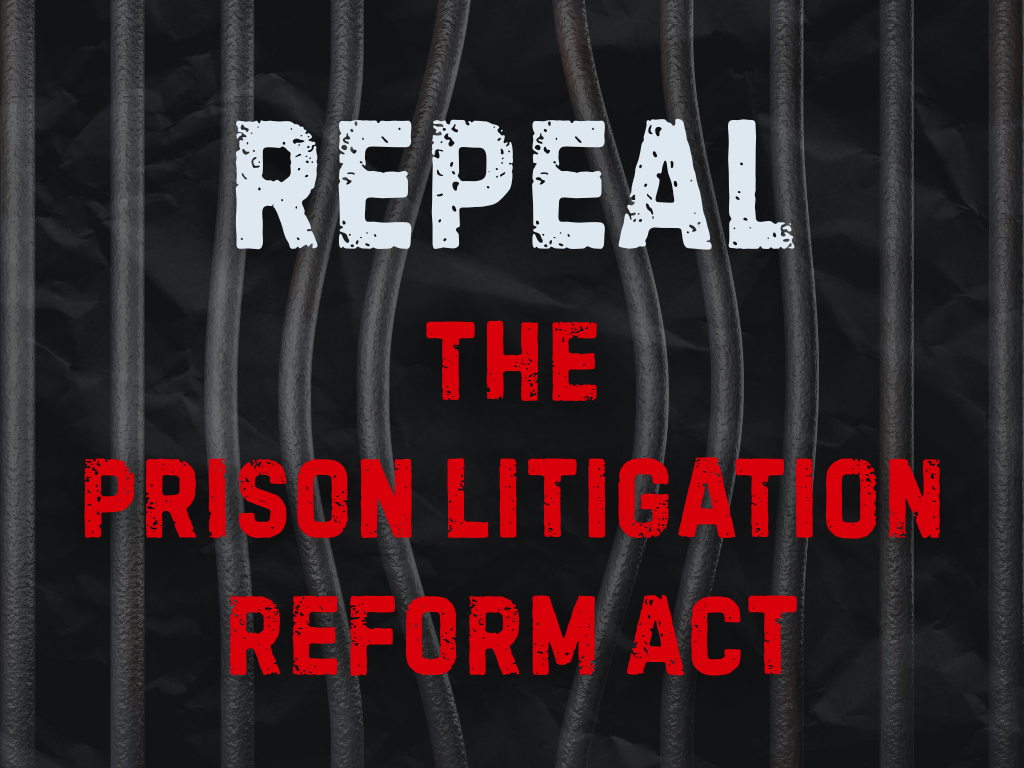
What is the Prison Litigation Reform Act and why does it matter? Jeremy Busby explains:
Signed into law by President Bill Clinton in 1996, the Prison Litigation Reform Act placed extreme restrictions on incarcerated individuals’ ability to file, win, or settle civil rights lawsuits. Lawmakers argued that there were too many frivolous lawsuits against the government.
But the law severely obstructed the pathways for all incarcerated individuals to obtain justice and crippled incarcerated journalists’ ability to make human rights violations known to the public.
…
The PLRA has served no real societal interest since its passage. It has done nothing but stop incarcerated individuals from advocating for their inalienable human rights.
The outrageous abuses inside America’s prisons that have been exposed in recent years should motivate lawmakers to provide incarcerated people with more, not less, access to the legal system. Maybe some incarcerated people file frivolous lawsuits, but so do people on the outside — it’s not a reason to deprive everyone else of legal recourse.
The PLRA’s unreasonable restrictions have bound the hands of federal judges to consider legitimate complaints from incarcerated individuals, hold rogue prison officials accountable, enforce court orders, and compel policy change.
Simultaneously, it unleashed prison officials’ ability to violate incarcerated individuals’ basic constitutional freedoms — including the rights of incarcerated journalists.
It has also restricted the basic function of journalists outside prison, and the taxpayers who read the news, to monitor how public funds are spent.
Outside journalists’ access to incarcerated sources and prison records is severely limited. Trials and court files are among the few places they can find the truth about what goes on on the inside. But when cases are dismissed on technicalities before a judge or jury considers the merits, journalists can’t discern which allegations are true.
Repealing the PLRA is a step toward justice for all. Incarcerated journalists are routinely targeted and subjected to all types of cruelty. Like journalists on the outside who run into oppressive government officials, we depend on recourse from the federal courts to serve as our last line of defense, as our news reporting often does for the incarcerated population and the American public.
Leave a Reply to Journalism Behind Bars: How federal law impedes reporting on America’s prisonsCancel reply